11 Plus Success: A Tutor's Guide for Parents
Having tutored many students for the entrance exams since 2018, with many gaining entry to some of the most prestigious schools in the UK and internationally, I have some general observations which you may find helpful with the preparation needed for your own children. There is a lot of information out there which I appreciate can be confusing and quite exhausting to follow. This article will provide some clarity on what is required for success in the entrance exams.
When do I recommend parents start preparation?
A good starting point is the summer term in Year 4. I have had students start later, into Year 5, and this is not ideal as it results in a hurried and stressful period for the children taking exams. This doesn’t mean it is not worth trying, as I have had success with students on very short intensive courses the summer before. However, starting with enough time allows the tutor to expose the student to the various subjects, make sure they are on top of the curriculum and get them used to the strict timing requirements.
It is important to bear in mind that, for most students, this will be the first time where students are preparing for a timed examination. This is a new skill and with any area of development, enough time is needed for the students to develop their timing and strategy.
The entrance exams test problem solving, academic understanding and timing simultaneously. This is why I urge that parents bear in mind all skills in a holistic approach, as early as possible in their children’s preparation. Good academic footing without time management will not lead to the desired results, so avoid treating these skills separately.
Know the distinctions between exams
In general, the entry process can be broken down into:
Stage 1: Pretest
Stage 2: School specific (If necessary)
Stage 3: Interview (If necessary)
Formats differ by school and region (GL, ISEB Pre-Test, schools' own papers, online adaptive or paper), so check the format first. You will find that there is a lot of common ground in the first stage of examinations, and I would recommend my advice on following the general school curriculum for maths and comprehension to make sure the student is covered. This will generally cover the maths and English component. Start doing exercises for reasoning in tandem. There are many good resources, both physical and digital on this such as Bond resources or examspapersplus.
When I am tutoring a student toward the 11+, part of my role is to build a profile for the range of schools being applied to and then clearly communicating with parents what to expect for each exam. If you are not working with a tutor, organisation is important here so that you are confident that the correct preparations are being made.
Syllabus
Be ahead of the syllabus but don’t overextend. A lot of schools are not very clear on what is needed and there can be quite a wide variation in topics and difficulty for the second-stage school-specific papers. Having said that, a good target is to be slightly ahead of the Year 6 syllabus in the Autumn Term of the student’s first term in Year 6. First stage exams are typically set at this level of difficulty. For the most competitive schools, there can be no gaps in knowledge and the student’s academic level in both comprehension and maths do need to pushed beyond the curriculum requirements.
For the majority of schools, however, it is not essential to learn topics outside of the general scope of the curriculum. In fact, ‘overlearning’ can be a disadvantage as this might lead to resources and time being used inefficiently during preparation.
Maths

For maths, students should aim to have control over foundational topics such as their times tables, percentages, decimals and fractions, conversions, geometry and foundational algebra. When I assess a student for the first time, I look to these areas and will produce a mental map of how far they have diverged from the curriculum. Rest assured, a big portion of my tutoring is filling in gaps. I see this as a bonus: preparing for the 11+ will address such gaps and keep students on track with the curriculum.
Comprehension

For comprehension, I often hear from parents that their children don’t read enough. Whilst reading is an important skill, the focus should be on reading comprehension, which can be effectively improved with targeted exercises. Instead of forcing your child to be constantly reading, it might be more productive to set investigative exercises where they need to find information quickly. This takes less time and can be more engaging, whilst recruiting the learning faculties that are more valuable for the exam. Successful comprehension also involves other skills, including information scanning, remembering key points, good inference skills and multiple-choice technique. Make sure to find exercises that emphasise these areas.
The 11+ rewards students who are mindful of how they are doing an exercise. Being aware of and in control of the methods being used is crucial. When my students become aware of how they are thinking and executing their answers, I see big jumps in improvement. Another reason for this constant focus on technique and method is that students won’t have the luxury of checking their answers so it is important that this is done as they are choosing their answers. Being decisive is absolutely critical to success in the 11+.
The 11+ doesn’t just value content but also method control and application. I find that children develop a stronger sense of confidence when they are more in control of the methods they apply. I find that my students also enjoy learning different approaches that prioritise efficiency and different tricks over just learning and regurgitating material.
Vocabulary

Often, I hear from parents that expanding their children’s vocabulary has been a challenge. However, vocabulary is a question of practice and normalisation into daily language. It is an unrealistic expectation to get a child to sit down and write lists of definitions to use words. The evidence is very clear on this: applying vocabulary in real sentences builds deeper, more durable word knowledge and better functional fluency than memorising isolated definitions.
Vocabulary is a section in the examination that in my opinion should not get in the way of performance, regardless of the student’s starting point. In a comprehension, vocabulary can often be inferred, and this can be taught to the student. We want the child to build an intuition for the sentences they are reading, piecing multiple sentences together to improve their mental image of the passage. These are all skills that can help instead of focusing on learning words.
Having said that, improving vocabulary is a great skill and I am always aiming to build this strength in my students taking the 11+. What I recommend for learning vocabulary is avoiding exhaustive lists of words with definitions but active use of new words in one's day-to-day language. I always tell my students when we find new words for them to demonstrate this in the following week to their parents and teachers in sentences. It will impress them and this recognition is another reward that will maintain this habit.
Is there a place for lists? Yes – a diary of words is a good tool but instead of labouring hours spent writing down definitions, it's better to write words and their associated synonyms or antonyms.
Reasoning
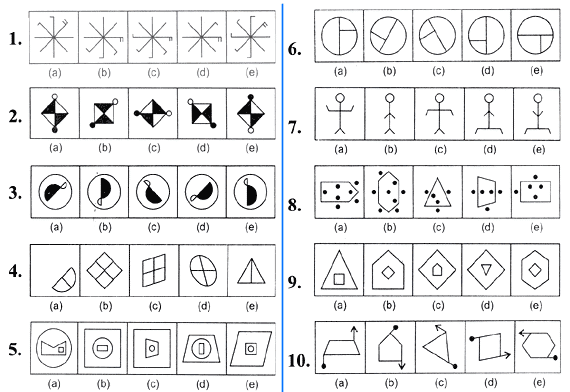
For many students, this is a new discipline. However, I find from experience that students take a positive attitude as it breaks up the cumbersome routine of school curriculums. There are many good resources to take advantage of, such as the ‘Bond’ exercise books as well as Atom Learning, that set curated reasoning exercises. You will find that there isn’t a huge amount to learn. The point here should be to build familiarity in the questions, identify ways to find quick and logical steps toward a solution and hone in on exam technique.
Exam Technique: Strategy and timing lead to control
The 11+ rewards execution just as much as it does one’s academic knowledge. This is a useful skill which will be utilised in future exams, so see it as a positive development. Find ways to make the timing element engaging and fun. For example, you can use quick times tables exercises, maths games that involve the family at the dinner table, all rewarding quick but controlled thought processes.
Rushing works against control. Many students think being very quick is positive, even when they make mistakes. Timing and accuracy must be taught simultaneously so bad habits are avoided. I always ask my students: is it good if you’re quick but lose the mark? The priority should always come back to accuracy. The balancing act between the skills of timing and accuracy is a fine one but with targeted guidance and mindful practice, students can get there. I have seen students go from making impulsive mistakes on every other question to demonstrating more consistent control within a few months.
A good way to achieve this is by encouraging incremental improvements to break down the task. For example, if the student completed 20 times tables questions in 50 seconds, make 45 seconds the next target. This is achievable but adds a little pressure and gives the student a reward at the end. Make notes of these in a timing diary and reward improvements. As a general rule, aim to bring down your child’s average answers to around 30-40 seconds per maths question and 40-50 seconds per comprehension question.
For the first pretest stage, in ISEB and the consortium exams as well as other boards, it is a massive advantage to use multiple choice as another tool. A good tip to follow is:
Narrow down your answers to two options, then compare them to find the answer. This is much more efficient than going through each answer. Examiners are cunning with their answer choices and want students to expend energy and time here. I always tell my students: Don’t fall into their traps. Your job is to outsmart the examiners. This makes my students more cautious and engaged as it becomes a game of outsmarting. I find that they can quickly become aware of traps, such as choosing the answer in pounds instead of pennies or going for the first option which may at first seem sensible. This is always a sign of excellent progress.
Sometimes it is important to know when to be strategic with answers. This should not be the default mode but is an added tool to help students when they are struggling. For instance, if the question is too difficult, they can rule out answers that they know won’t work. This will narrow their options and improve the chances of choosing correct answers. This leads onto another key point I always raise: Guessing means you lose control. Choosing means you are in control.
Consistency
One of the most important pieces of advice I can give to parents is the following: make sure good quality practice is done consistently. Once the strategies are dialled in, and the core components are covered, consistency and volume are essential. This should be done weekly at the beginning and the volume increased in line with the student’s tolerance, as they approach the exam, with a peak of practice around a few weeks before the exam. I always ingrain into parents the idea of removing surprises from the exam through a high volume of targeted practice that familiarises the student with the range of questions. There should almost be an expectation of what will come up and this can only be achieved with practice.
Using technological resources to track progress
I have written many blogs on technology, when to utilise them and when to be mindful. A lot of the exams are set on a computer and so this proficiency is important, early on.
However, technology should be used more for the assistance of lessons, monitoring progress and setting targeted work rather than the teaching of the skills and technique itself. I am constantly monitoring new apps and am yet to find something that can teach strategy effectively. I will be monitoring this space and will update you if there are any new resources.
I recommend the following tools:
Times Tables Rock Stars
Atom Learning
Exam experience

Simulating exam conditions externally is a bonus but not necessary. This can be done in the home, with strict timing and papers printed out. This should not be done too early so as not to cause distress. Try to avoid discussing exams in front of children. It’s important not to forget these are children taking consequential exams that matter for the first time in their lives.
Healthy and Honest Expectations
Whilst parents, and students, will have their preferred schools, it is important to take on board the tutor’s recommendations and whether a wider range of schools are more appropriate.
Life lessons from entrance exam preparation
The entrance exams, in my opinion, shaped my own personal development, developing maturity in my education. It taught me decision making, control and exam confidence (at a time when I had to take an exam for every school I applied for!). This should be a very engaging and memorable experience, if coordinated well with enough time.
My Entrance Exam Programme
Securing a place in a top school requires a strong grasp of the general academic curriculum, refined exam technique, performance under pressure, and the presentation of a strong profile outside of academia for the interview. My tried and tested entrance exam programme alleviates the stress and responsibility placed on parents and the pressure placed on children. I adapt my approach to my students’ individual needs, understanding where they need help and how to make the process enjoyable for them. My students gain entrance to top schools while building confidence and skills that will serve them throughout their academic careers.
If you would like to discuss your child’s preparation, you can contact me here.
